
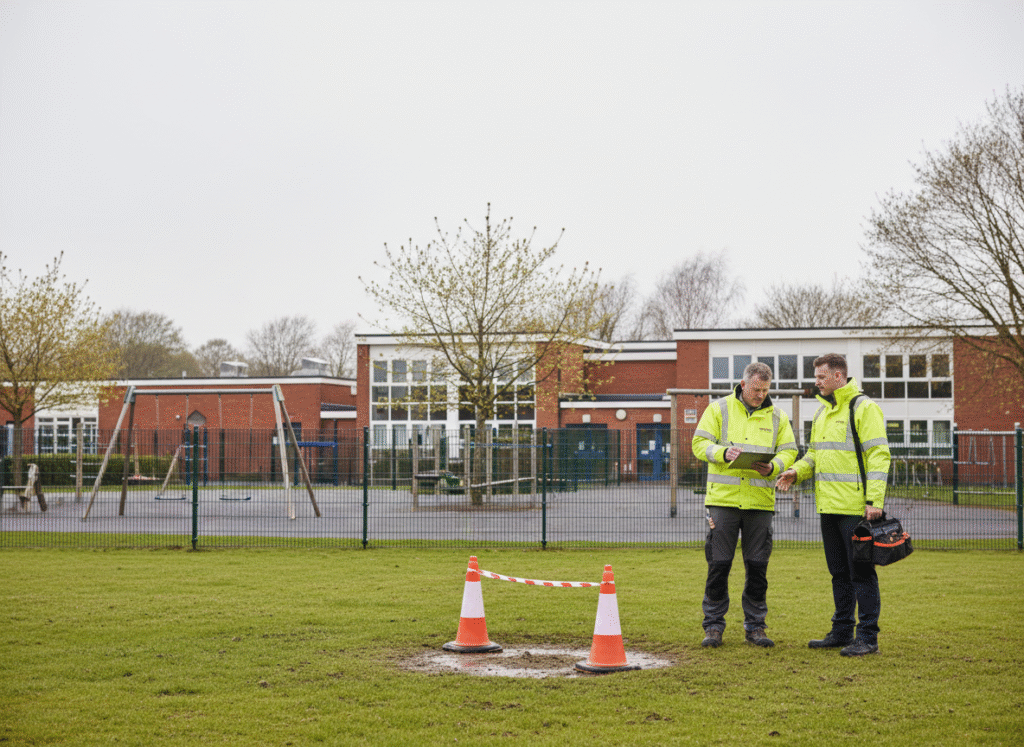
Spring term is when many schools and trusts shift from immediate winter issues to planned maintenance and compliance checks before Easter and ahead of summer works. For Headteachers, School Business Leaders, site teams and MAT estates leads, a structured approach helps you reduce risk, protect budgets, and avoid last-minute contractor scrambles.
This school premises maintenance checklist is designed to help you prioritise what to inspect, what to schedule, and how to compare suppliers confidently.
Why spring term is the right time to review premises maintenance
January to March is a practical window because:
- Winter wear-and-tear becomes visible (leaks, heating strain, external damage)
- You can plan works around half term/Easter
- You can gather quotes early for summer projects
- You can evidence proactive compliance and risk management
What counts as “school premises maintenance”?
Depending on your setting, this can include:
- Building fabric: roofs, gutters, windows, doors
- Heating and ventilation: boilers, controls, air quality
- Electrical: lighting, emergency lighting, fixed wiring checks
- Fire safety: alarms, doors, signage, evacuation routes
- Water hygiene: flushing, temperature checks, legionella controls
- Security: CCTV, access control, perimeter fencing
- Outdoor areas: playground surfacing, line marking, drainage
- Cleaning and waste: deep cleans, hygiene supplies, disposal
The school premises maintenance checklist
Use the steps below as your spring-term plan.
1) Start with a quick “risk-first” walk-through
Do a focused walk-through (30–60 minutes) and record:
- Anything that could cause injury (trip hazards, loose handrails, damaged flooring)
- Any safeguarding/security gaps (gates, doors not closing, blind spots)
- Any water ingress or damp (ceilings, corners, storerooms)
- Any blocked access routes (including fire exits)
Capture photos and locations. This becomes your evidence trail and your contractor brief.
2) Check your compliance calendar and evidence folder
A strong school premises maintenance checklist includes evidence, not just actions. Alongside your own site records, it’s worth aligning your approach to recognised guidance such as the DfE’s Good estate management for schools (GEMS) guidance (https://www.gov.uk/guidance/good-estate-management-for-schools).
Also, keep a simple “evidence folder” so you can quickly show what’s been checked and when. For example:
- Recent inspection/service records (with dates)
- Remedial actions and who signed them off
- Contractor details and insurance documents
- Risk assessments and method statements (RAMS) where relevant
If you’re in a MAT, standardise the folder structure across sites.
3) Prioritise jobs into three buckets
This prevents your list becoming unmanageable:
- Immediate (0–2 weeks): safety-critical, active leaks, security failures
- Planned (2–8 weeks): repairs you can schedule around term dates
- Summer pipeline: larger works needing multiple quotes and lead time
4) Write a contractor brief that gets like-for-like quotes
To compare suppliers fairly, define:
- Exact locations and access constraints (school hours, parking, DBS expectations)
- Scope and materials (what “good” looks like)
- Disposal requirements (waste, old materials)
- Timescales and preferred working windows
- What you need included (labour, materials, making good, certification)
If the school premises maintenance work involves waste removal, make sure responsibilities are clear and consistent with Environment Agency guidance on waste responsibilities (https://www.gov.uk/topic/environmental-management/waste).
The clearer your brief, the fewer surprises you’ll get later.
5) Ask procurement questions that reduce risk
When comparing premises suppliers, ask:
- Do you have experience working in schools/MATs?
- What safeguarding approach do you use on site (sign-in, supervision, working areas)?
- Can you provide RAMS and evidence of insurance?
- Who is the named site lead and what’s the escalation route?
- What is the warranty/aftercare on the work?
- How do you handle change requests and cost variations?
6) Plan around the school calendar (and protect learning)
Spring term planning should include:
- Noisy works scheduled for after school, weekends, or holidays
- Clear site segregation and signage
- A communication plan for staff (what’s happening, when, and who to contact)
- Contingencies for weather delays (especially external works)
7) Don’t forget outdoor areas and “first impressions”
Outdoor areas influence safety, behaviour, and community perception. Consider:
- Playground surfacing and drainage
- Loose fencing panels and gate latches
- Slips/trips around entrances (HSE advice on preventing slips and trips: https://www.hse.gov.uk/slips-trips/)
- Line marking and sports hall/external court condition
- Storage areas (shed security, clutter)
8) Fire safety and water hygiene: make the “high-risk” checks visible
Two areas that benefit from clear scheduling and evidence are fire safety and water hygiene.
- For fire, make sure your responsibilities are understood and documented in line with UK Government fire safety guidance (https://www.gov.uk/workplace-fire-safety-your-responsibilities).
- For water systems, ensure your controls reflect HSE guidance on legionella risk management (https://www.hse.gov.uk/legionnaires/).
9) Build a simple KPI view for governors/MAT leaders
For assurance, track:
- Number of open actions (by priority)
- Time to close safety-critical issues
- Planned vs reactive spend
- Repeat issues (to identify root causes)
This supports budget decisions and shows proactive management.
Find and compare premises maintenance companies on the National Register of Education Suppliers
If you’re shortlisting school premises maintenance contractors, the fastest route is to use the National Register of Education Suppliers where you can compare suppliers side-by-side and look for evidence of education experience, accreditations, and clear service descriptions.
If you’re planning spring works, it can help to compare specialists by category on the National Register of Education Suppliers. For outdoor upkeep and seasonal jobs (grass cutting, hedge work, litter clearance, drainage checks and general site presentation), browse trusted providers in the grounds maintenance category: https://incensu.co.uk/single-category/grounds-maintenance/. If your priority is reducing risk and keeping compliance evidence tidy (audits, inspections, policies and training support), you can shortlist suppliers in health and safety here: https://incensu.co.uk/single-category/health-and-safety/. And for larger projects, condition surveys, feasibility work or support with planned improvements, explore building consultants on the register: https://incensu.co.uk/single-category/building-consultants/.
If you’re a school and want to share your experience, you can recommend a trusted supplier here: https://incensu.co.uk/recommend-a-school-supplier/
Final checklist summary
Before you book works, confirm:
- We’ve completed a risk-first walk-through and documented issues
- Compliance evidence is organised and up to date
- Jobs are prioritised (immediate, planned, summer pipeline)
- Quotes are like-for-like with a clear contractor brief
- Safeguarding and site controls are agreed
Using this school premises maintenance checklist helps you reduce risk, protect learning time, and plan works in a way that supports budget certainty. time, and plan works in a way that supports budget certainty.
Recommended Reading
How UK schools save money with collaborative purchasing
Navigating School Procurement Compliance: A Practical Guide for School Leaders
Essential school playground maintenance checklist: choosing the right supplier in the spring term