
This guide is part of the SEND Provision & Inclusion: Planning & Procurement Hub – SEND Provision & Inclusion Hub: Planning & Procurement | Incensu
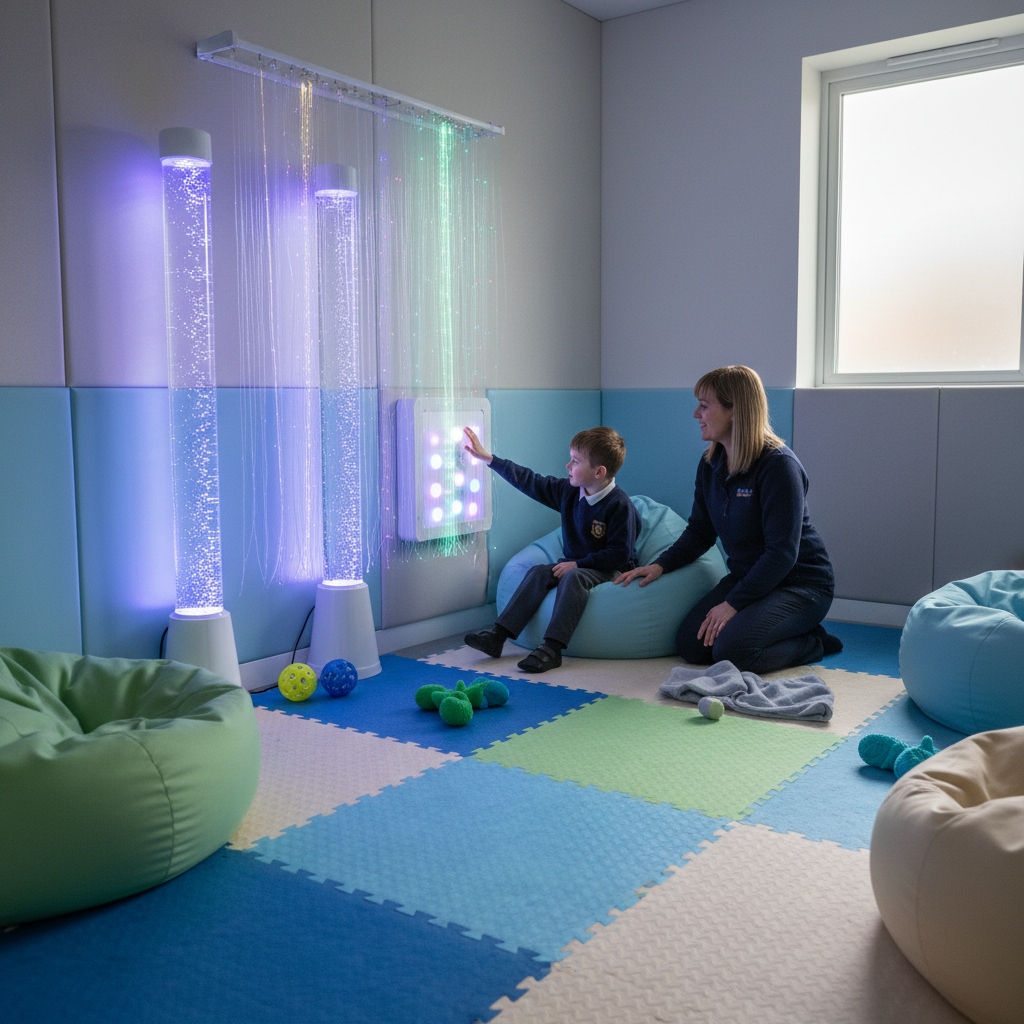
How sensory rooms and calm spaces can help pupils return to learning
A well-designed calm space can support regulation, reduce escalation and help pupils return to learning. But a calm space only works if it is safe, supervised appropriately, and easy for staff to run day-to-day. This guide covers the practical decisions to make before you buy equipment or start changing a room.
Useful links (planning a sensory room or calm space)
- Understanding sensory needs: NHS – Sensory overload
- Find trusted suppliers: SEN Supplies, Furniture, Building Consultants
1) Decide the purpose of the space
Start by agreeing what the space is for. Common purposes include:
- Regulation and de-escalation
- Sensory breaks
- Short, supported interventions
- Quiet reset before returning to class
Be clear about what it is not for (for example: unsupervised time, or a general “time out” room).
2) Choose the right location
Location affects supervision and noise.
- Close enough to staff support
- Not in a high-traffic corridor
- Consider sound transfer to neighbouring rooms
- Consider toilet access and safeguarding routes
3) Supervision and safeguarding: plan this early
Before you buy anything, decide:
- Who can use the space and when
- Whether it is 1:1, small group, or both
- How staff will supervise (line of sight, door vision panels where appropriate)
- What the escalation route is if a pupil becomes distressed
Avoid layouts that create blind spots.
4) Design basics that make the biggest difference
You do not need lots of expensive kit to get the basics right.
- Lighting: reduce glare; consider dimmable options
- Acoustics: soften echo; reduce sudden noise
- Colour: calm, neutral palette
- Storage: keep it tidy and predictable
- Zoning: clear areas for movement vs quiet
For a quick, parent- and staff-friendly overview of sensory overload and common triggers, see the NHS guidance on sensory overload.
5) Equipment: buy for needs, not novelty
Common categories include:
- Seating and soft furnishings (wipe-clean where needed)
- Weighted items (with clear guidance and staff training)
- Tactile and fidget resources
- Simple visual supports (feelings scales, breathing prompts)
If you choose specialist sensory equipment, confirm durability, cleaning requirements, and replacement parts.
6) Practicalities that schools often miss
- Cleaning and infection control
- Fire safety and safe access
- PAT testing where relevant
- Safe storage of small items
- A simple booking or handover process
7) Procurement: what to ask suppliers
- What is included (design support, installation, training)?
- What are lead times and site requirements?
- What is the warranty and maintenance plan?
- What evidence or case studies do you have in schools?
8) Launch and review
Start small, train staff on routines, and review after the first few weeks.
- Is it being used as intended?
- Is it reducing escalation?
- Are staff confident?
- Do you need to adjust the layout or resources?
Find trusted suppliers (Incensu categories)
Look for suppliers displaying the Education Supplier Badge

Further reading
Next step
If you are planning a calm space, agree purpose and supervision first, then design around the basics (light, sound, storage) before adding specialist equipment.
Back to hub
SEND Provision & Inclusion Procurement Hub https://incensu.co.uk/articles/send-provision-inclusion
More guides in this hub
- SEND classroom resources and assistive technology: what to prioritise — SEND classroom resources & assistive technology — what to prioritise – incensu.co.uk
- Adapting classrooms for SEND: practical building changes that make a difference — Adapting classrooms for SEND — practical building changes that make a difference – incensu.co.uk
- Inclusive furniture and learning environments: SEND-friendly classroom setup — Inclusive classroom furniture for SEND: what to look for and how to set up