
This guide is part of the SEND Provision & Inclusion: Planning & Procurement Hub – SEND Provision & Inclusion Hub: Planning & Procurement | Incensu
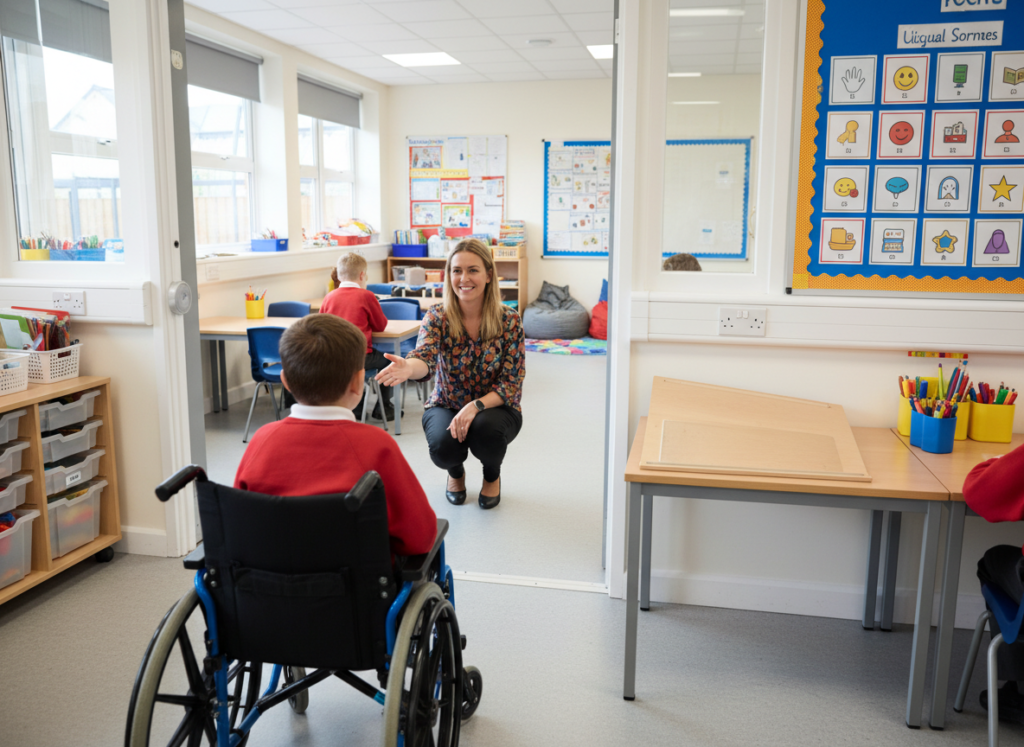
Adapting classrooms for SEND, even on a small scale, can make a difference
Not every SEND improvement requires a big refurbishment. Small, well-chosen changes to layout, acoustics, lighting and accessibility can improve inclusion quickly — especially when they reduce sensory overload and make routines more predictable. This guide focuses on practical building and environment changes schools can plan and procure sensibly.
Useful links (inclusion and classroom adaptations)
- Legal context: The Equality Act 2010: guidance
- Find trusted suppliers: Building Consultants, Furniture, Training
1) Start with observation and pinch points
Walk the space at busy times and note:
- Where noise spikes
- Where movement bottlenecks happen
- Where pupils struggle to settle
- Where storage causes clutter
If you can, involve staff who know the cohort well.
2) Acoustics: reduce echo and sudden noise
Noise is a common barrier.
Practical options include:
- Soft furnishings and display choices that reduce echo
- Door closers adjusted to reduce slamming
- Acoustic panels in targeted areas
- Zoning to separate louder activities
3) Lighting and glare
Harsh lighting and glare can increase stress.
- Reduce flicker where possible
- Use blinds to manage glare
- Consider calmer lighting zones
4) Layout: predictable zones and clear pathways
A predictable layout supports independence.
- Clear walkways and defined zones
- Reduce visual clutter where possible
- Create a calm reset point (even a small one)
- Make storage consistent and labelled
5) Accessibility and movement
For physical access needs, consider:
- Door widths and thresholds
- Handrails and ramps where needed
- Height-appropriate furniture
- Safe access to resources
If you are unsure, a building consultant can help you prioritise changes.
Any changes should be considered in the context of reasonable adjustments—this overview of the Equality Act 2010 guidance is a helpful starting point for school leaders.
6) Toilets, hygiene and dignity
Small changes can make a big difference:
- Clear signage and wayfinding
- Privacy considerations
- Space for support where appropriate
7) Procurement and delivery considerations
- What can be done in-house vs needs contractors?
- What are lead times for furniture and fittings?
- How will you manage disruption?
- Who signs off the finished space?
8) Evidence impact
Choose simple measures:
- Reduced incidents linked to the environment
- Improved engagement in key parts of the day
- Staff confidence and consistency
Find trusted suppliers (Incensu categories)
Look for suppliers displaying the Education Supplier Badge

Further reading
Next step
Pick one high-impact barrier (noise, glare, clutter, bottlenecks) and plan a small set of changes you can implement and review within a half term.
Back to hub
SEND Provision & Inclusion Procurement Hub https://incensu.co.uk/articles/send-provision-inclusion
More guides in this hub
- SEND classroom resources and assistive technology: what to prioritise — SEND classroom resources & assistive technology — what to prioritise – incensu.co.uk
- Sensory rooms and calm spaces: planning, design and procurement essentials — Sensory rooms & calm spaces — planning, design and procurement essentials – incensu.co.uk
- Inclusive furniture and learning environments: SEND-friendly classroom setup — Inclusive classroom furniture for SEND: what to look for and how to set up