
This guide is a part of the School Premises Compliance Hub – School Premises Compliance Hub: Statutory Checks & Risk Management | Incensu
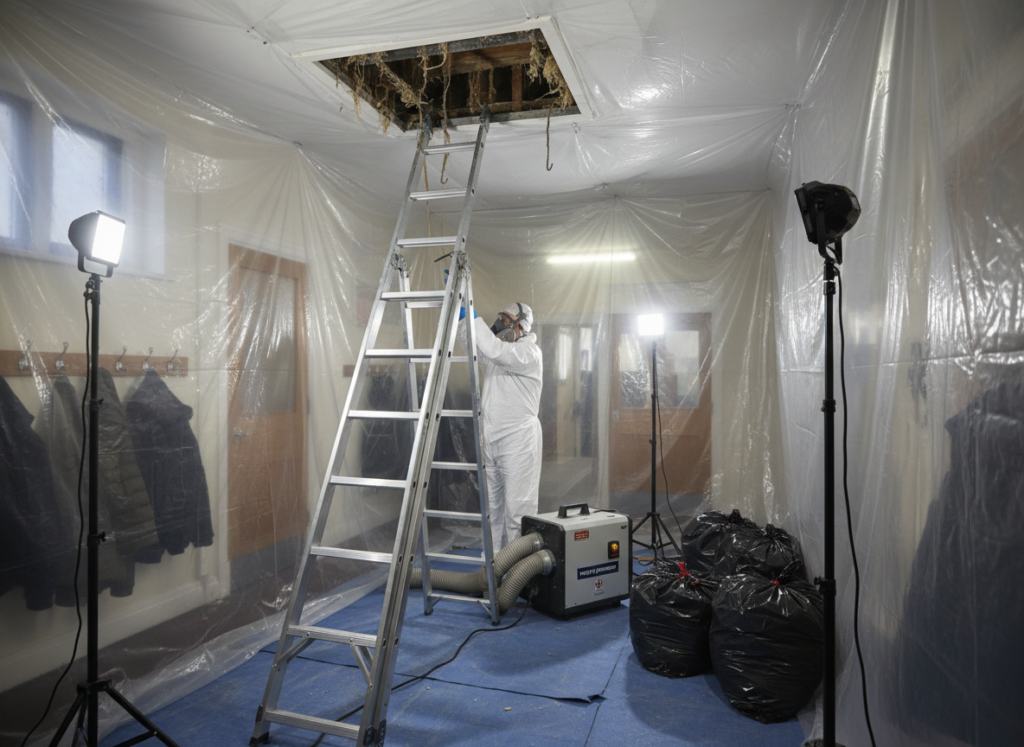
Why asbestos management in schools still matters
If your school buildings were built or refurbished before 2000, you may have asbestos-containing materials on site — so a clear, up-to-date asbestos management plan is essential for keeping people safe and staying compliant.
Many school buildings contain asbestos-containing materials (ACMs), particularly those built or refurbished before 2000. Asbestos is not automatically dangerous if it is in good condition and not disturbed. The risk comes from damage, deterioration, or work that drills, cuts or breaks materials and releases fibres.
For school leaders, the priority is assurance: you need confidence that risks are controlled, responsibilities are clear, and evidence is available if you are inspected or if an incident occurs. For premises teams, the priority is practical control: knowing where ACMs are, preventing disturbance, and managing contractors safely.
The legal duty (in plain English)
In the UK, asbestos is managed under the Control of Asbestos Regulations 2012. The key requirement for most schools is the duty to manage asbestos in non-domestic premises.
The dutyholder is the person or organisation that has responsibility for maintenance and repair of the building. In schools this may be the local authority, the governing body, an academy trust, or a landlord (for leased buildings). In practice, day-to-day tasks are often delegated to the Headteacher, School Business Manager (SBM), Estates lead, or Site Manager, but the dutyholder still needs assurance that the system works.
What an asbestos management plan is (and what it is not)
An Asbestos Management Plan (AMP) is your written system for controlling asbestos risk. It should bring together:
- What you know (survey information and register)
- What you do (controls, checks, contractor process)
- Who does it (roles, training, escalation)
- How you prove it (records, audits, review cycle)
It is not just a survey report. The survey tells you what was found at a point in time; the AMP sets out how you will manage it safely over time.
Surveys and the asbestos register: the foundation
Management survey vs refurbishment/demolition survey
Most schools need both types at different times:
- Management survey: identifies ACMs that could be disturbed during normal occupation, routine maintenance, and foreseeable activities. This underpins your asbestos register.
- Refurbishment/demolition survey: required before intrusive work (e.g., replacing ceilings, rewiring, boiler replacement, major refurb). It is more invasive and is specific to the area and scope of works.
Your asbestos register should be usable
A strong asbestos register is:
- Easy to access quickly (including when the SBM is off-site)
- Clear enough for non-specialists to understand
- Kept up to date after re-inspections, removals, encapsulation, or changes to rooms
Many schools keep a digital copy plus a controlled hard copy in the site office.
What the asbestos management plan should cover (expert checklist)
Use the sections below as a practical template.
1) Roles, responsibilities and escalation
Define, at minimum:
- Dutyholder: who holds the legal responsibility
- Asbestos Responsible Person (ARP): the named person managing the system day to day
- Deputy ARP: cover for absence
- Site/premises team responsibilities: routine checks, access control, reporting damage
- School leaders/governance: how assurance is obtained (reports, audits, KPIs)
Include an escalation route for:
- Suspected damage to ACMs
- Unplanned works or emergency repairs
- Contractor non-compliance
2) How you prevent disturbance in day-to-day school life
Your plan should explain how you control common “disturbance routes”, for example:
- Display boards, hooks, shelving and ICT installs (drilling)
- Door closers, access control, alarms, CCTV installs
- Minor repairs (patching walls, replacing tiles)
- Moving furniture and equipment in tight plant rooms
Practical controls can include:
- A “no drilling/no fixing” rule unless authorised
- Approved fixing points in certain rooms
- Clear signage in plant rooms/void access points where appropriate
- A simple reporting process for any damage (photo + location + immediate isolation)
3) Contractor management (this is where many schools fail)
Your AMP should set out a consistent contractor process. At a minimum:
- Pre-start requirement: contractors must review the asbestos register relevant to their work area
- Induction: who briefs them, what they sign, and how it is recorded
- Permit-to-work or authorisation: especially for intrusive work
- Method statements and risk assessments: checked by a competent person
- Stop-work rule: if unexpected materials are found
Good practice is to keep a standard “asbestos acknowledgement” form and attach it to job packs.
4) Condition monitoring and re-inspection schedule
ACMs should be re-inspected at a suitable frequency (often annually, but risk-based). Your plan should state:
- Who carries out re-inspections (competent person)
- How condition is scored and recorded
- How actions are raised and tracked (repairs, encapsulation, removal)
- How you ensure re-inspections are not missed (calendar + owner)
5) Training and awareness
Different people need different levels of training:
- Asbestos awareness: for staff who may disturb the fabric of the building (site team, caretakers, some contractors)
- Task-specific training: if anyone is expected to do work that could affect ACMs (often this should be avoided)
- Leadership awareness: for SBMs/Headteachers so they can commission works safely and ask the right questions
Your AMP should record:
- Who has been trained
- Training provider and date
- Renewal frequency
6) Communication and access to information
Explain how the asbestos register is made available:
- During normal hours
- During out-of-hours call-outs and emergencies
- For visiting contractors
If you have multiple buildings, include a clear map or building list so people don’t rely on memory.
7) Managing incidents: what to do if asbestos is suspected or disturbed
This section should be explicit and easy to follow. Include:
- Stop work immediately and keep people away
- Isolate the area (close doors, prevent access)
- Do not sweep, vacuum or clean debris
- Inform the ARP/dutyholder and record what happened
- Arrange competent assessment (and air testing/clearance if required)
- Communicate appropriately with staff/contractors and, if needed, parents (keep messaging factual)
Also include how you record incidents and what triggers a review of the AMP.
8) Planned works and projects (refurbishment, roofing, M&E)
Your AMP should link asbestos management to your projects process:
- When a refurbishment/demolition survey is required
- How survey scope is defined (areas, voids, service routes)
- How findings are built into the project plan (time, cost, access)
- How you ensure removal/encapsulation is completed and documented before handover
9) Record-keeping and audit trail
For an “expert” feel, be specific about what evidence you keep:
- Latest surveys and asbestos register
- Re-inspection reports and action logs
- Contractor acknowledgements/inductions
- Permits to work (where used)
- Incident reports and outcomes
- Training records
- Certificates of reoccupation/clearance (where removal works occur)
Set a review cycle (e.g., termly internal check + annual management review) and state who signs it off.
Practical tips for school leaders and premises teams
- Make it routine: put re-inspections, governance reporting, and planned works triggers into your compliance calendar.
- Avoid “informal jobs”: most asbestos issues happen during small, rushed tasks.
- Control access to risers/voids/plant rooms: these areas often contain ACMs and get disturbed during emergency repairs.
- Use a standard job pack: asbestos register extract + sign-off + method statement check.
- Audit your contractor process: spot-check whether contractors can explain what they reviewed.
Useful links (UK guidance)
- HSE – Asbestos and the duty to manage: https://www.hse.gov.uk/asbestos/duty.htm
- HSE – Control of Asbestos Regulations 2012 (overview): https://www.hse.gov.uk/asbestos/regulations.htm
- Department for Education – Good estate management for schools (GEMS): https://www.gov.uk/government/publications/good-estate-management-for-schools-gems
Next step
If you’re not confident your asbestos management plan is “audit-ready”, start with a quick gap check:
- Is the asbestos register easy to access and up to date?
- Do you have a consistent contractor sign-off process?
- Are re-inspections scheduled and evidenced?
Then speak to a competent building consultant/surveyor to confirm your survey strategy and management plan approach.
Find trusted suppliers
Look for suppliers displaying the Education Supplier Badge

- Building Consultants: https://incensu.co.uk/single-category/building-consultants/
- Health & Safety: https://incensu.co.uk/single-category/health-and-safety/
FAQs
1) Do we need to remove asbestos from a school building?
Not usually. If ACMs are in good condition and unlikely to be disturbed, they can often be managed in place with monitoring and controls.
2) Who is the dutyholder for asbestos in a school?
It depends on who is responsible for maintenance and repair (local authority, academy trust, governing body, or landlord). The dutyholder can delegate tasks, but not the legal responsibility.
3) How often should asbestos be re-inspected?
Commonly annually, but it should be risk-based. Higher-risk or more vulnerable materials/areas may need more frequent checks.
4) What should we do if we suspect asbestos has been disturbed?
Stop work, isolate the area, prevent access, and arrange competent assessment. Do not attempt to clean up debris yourself.
Back to the hub
School Premises Compliance: Statutory Checks & Risk Management Hub https://incensu.co.uk/articles/school-premises-compliance-hub/
More guides in this hub