
This guide is a part of the School Premises Compliance Hub – School Premises Compliance Hub: Statutory Checks & Risk Management | Incensu
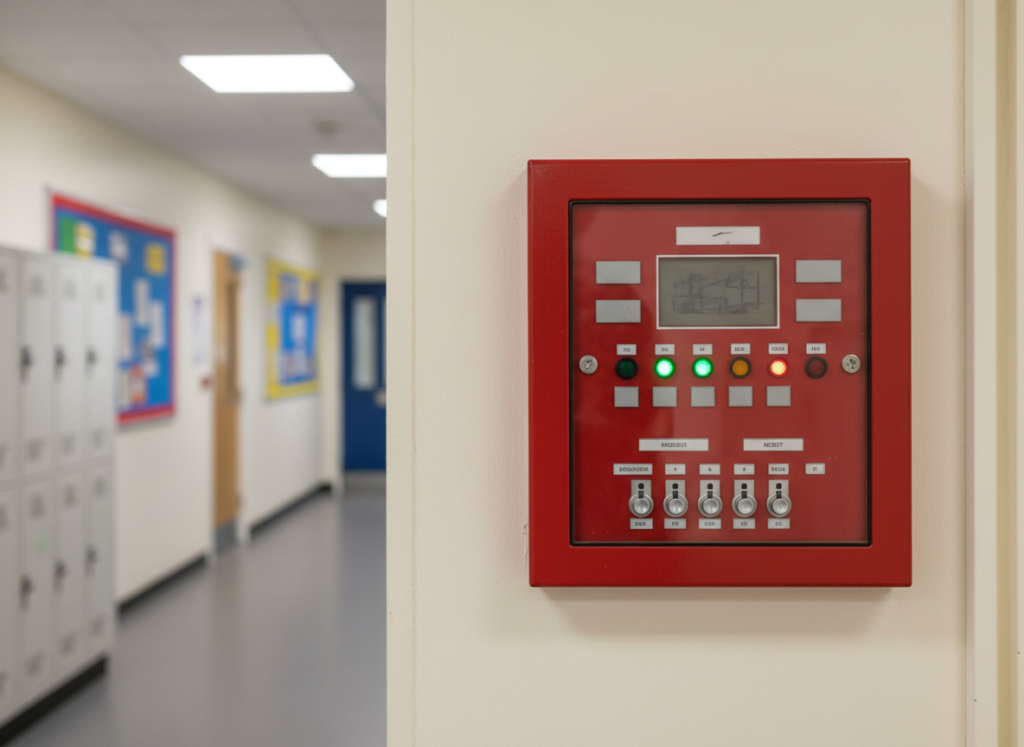
Why fire safety in schools needs a system (not just a folder)
Fire safety is one of the most scrutinised parts of premises compliance because it relies on routine checks, clear roles, and evidence that the school can evacuate safely. The goal is simple: reduce the likelihood of a fire starting, slow fire and smoke spread, keep escape routes usable, and make sure everyone can get out quickly.
For school leaders and trust teams, the focus is assurance: are responsibilities clear, are checks happening, and can we evidence it? For premises teams, the focus is practical control: keeping routes clear, checking doors and alarms, and managing contractors and hot works safely.
The legal picture (plain English)
Fire safety duties in schools are mainly driven by:
- The Regulatory Reform (Fire Safety) Order 2005 (England & Wales)
- Building fire safety standards (how the building is designed and maintained)
Every school should have a Responsible Person (often the employer/dutyholder) and competent support to manage fire safety. Day-to-day tasks may be delegated to the Headteacher, School Business Manager (SBM), Estates lead or Site Manager, but responsibility still needs clear oversight.
Start with the fire risk assessment (FRA)
Your Fire Risk Assessment is the foundation. It should be suitable and sufficient, and reviewed regularly (and whenever there are changes).
A strong FRA process includes:
- A clear description of the premises and how it is used (including breakfast club, after-school activities, lettings)
- Identification of fire hazards (sources of ignition, fuel, oxygen)
- People at risk (including those who may need help evacuating)
- Evaluation of existing controls (detection, compartmentation, escape routes)
- An action plan with owners and deadlines
When should the FRA be reviewed?
Review is typically needed when:
- You change the building layout or use of rooms
- You have building works, new plant, or changes to fire alarm coverage
- You change occupancy patterns (e.g., more lettings, wraparound care)
- A drill or incident highlights issues
Roles and responsibilities (make them explicit)
For an “audit-ready” approach, define:
- Responsible Person: overall accountability
- Fire safety lead: day-to-day coordination of checks, servicing and training
- Premises/site team: routine checks, reporting defects, maintaining access
- Office/SBM team: contractor scheduling, record management, escalation
- All staff: keeping routes clear, reporting hazards, following procedures
Include cover arrangements for holidays and absence.
Routine checks: what to do weekly, monthly and termly
The exact schedule should match your FRA and system type, but the structure below works well for most schools.
Weekly checks (typical)
- Fire alarm test (at a consistent time): confirm sounders operate and record the result
- Call point rotation: test a different manual call point each week so they are all tested over time
- Escape routes check: corridors, stairwells and final exits clear and usable
- Final exit doors: open easily, not obstructed, and any panic hardware works
Monthly checks (typical)
- Emergency lighting function test (where installed): brief test and record
- Fire doors quick checks: doors close properly, not wedged open, seals intact, closers working
- Extinguishers visual check: in place, accessible, not damaged, pressure indicator normal (if applicable)
Termly checks (typical)
- Fire drill (at least once per term is common practice): vary time and scenario
- Review of evacuation issues: roll call, blocked routes, door issues, staff confidence
- Update staff briefing: remind teams about routes, assembly points and reporting defects
Fire doors: the most common weak point
Fire doors are critical for limiting smoke and fire spread. Your system should cover:
- Doors are not wedged open (unless fitted with compliant hold-open devices linked to the alarm)
- Closers work and doors latch shut
- Gaps are appropriate and seals are intact
- Vision panels and glazing are undamaged
- Door furniture is secure (handles, hinges, panic bars)
If you have a lot of doors, consider a simple door ID system so defects can be logged and tracked.
Servicing and maintenance: what should be professionally serviced?
Your FRA and system specifications will drive exact frequencies, but most schools will need planned servicing for:
- Fire alarm system (competent contractor)
- Emergency lighting (competent contractor)
- Fire extinguishers (competent contractor)
- Fire shutters/automatic doors (if present)
- Sprinklers/suppression systems (if present)
Keep certificates and service reports together, and log remedial actions with owners and deadlines.
Contractor control and hot works (reduce avoidable risk)
A lot of school fire risk comes from contractors and maintenance tasks. Your controls should include:
- Contractor induction that covers fire procedures and escape routes
- Clear rules on storage of materials and keeping routes clear
- Hot works controls (welding, grinding, roofing works): permit-to-work, fire watch, and housekeeping
- A “stop work” rule if conditions become unsafe
Evacuation planning: drills, roll call and PEEPs
Make drills meaningful
Avoid drills that become predictable. Improve confidence by:
- Varying the time of day and exit routes
- Testing different assembly points if you have them
- Including scenarios such as a blocked corridor (planned and safe)
Record what happened and what you changed as a result.
Personal Emergency Evacuation Plans (PEEPs)
Personal Emergency Evacuation Plans (PEEPs) are individual plans for people who may need additional support to evacuate safely (for example, mobility needs, hearing impairment, or other needs identified by the school). Your process should cover:
- How PEEPs are created and reviewed
- Who is responsible for implementing them day to day
- How changes are communicated (new pupils, staff changes, temporary injuries)
Record-keeping: what “good” looks like
Aim for a single, organised evidence trail. Keep:
- Current Fire Risk Assessment and action plan
- Weekly alarm test log (including call point rotation)
- Emergency lighting checks and servicing certificates
- Extinguisher servicing certificates and defect logs
- Fire door inspection records and remedial actions
- Drill records (date, time, evacuation time, issues, improvements)
- Training records (induction, refresher, fire warden training where used)
- Contractor induction records and hot works permits (if used)
A simple approach is a digital folder plus a controlled hard copy in the site office.
Practical tips that make a big difference
- Put servicing and re-tests into your compliance calendar with reminders.
- Treat “small jobs” as high risk: drilling, ceiling access, electrical works and roofing.
- Do a quick weekly walkround at the same time as the alarm test.
- Track defects like you would safeguarding actions: owner, deadline, evidence of completion.
Useful links (UK guidance)
- Fire safety in the workplace (UK Government): https://www.gov.uk/workplace-fire-safety-your-responsibilities
- Home Office: Fire safety guidance documents: https://www.gov.uk/government/collections/fire-safety-guidance
- HSE: Fire safety in construction/maintenance (contractor risk): https://www.hse.gov.uk/construction/safetytopics/fire.htm
Next step
If you want to tighten your fire safety assurance quickly, start with a 30-minute gap check:
- Is the FRA current and does it reflect how the site is used?
- Are weekly tests and escape route checks consistently recorded?
- Are fire door defects identified and fixed promptly?
- Are servicing certificates easy to find and actions tracked?
Then brief your chosen contractor(s) and set calendar reminders for the year.
Find trusted suppliers
Look for suppliers displaying the Education Supplier Badge

- Fire Protection: https://incensu.co.uk/single-category/fire-protection/
- Health & Safety: https://incensu.co.uk/single-category/health-and-safety/
- Facilities Management: https://incensu.co.uk/single-category/facilities-management/
FAQs
1) How often should we test the fire alarm in a school?
Many schools test weekly, rotating call points so each is tested over time. Your FRA and system type should confirm the right routine.
2) Do we need a fire drill every term?
Many schools run at least one drill per term, and also after significant changes (new intake, building works, route changes). Your FRA should guide frequency.
3) What are PEEPs?
Personal Emergency Evacuation Plans (PEEPs) are individual plans for people who may need additional support to evacuate safely.
4) What fire safety records should we keep?
Keep your FRA, alarm test logs, servicing certificates, drill records, fire door checks, training records, and contractor/hot works controls where used.dence pack so it’s ready when you need it.
Back to the School Premises Compliance hub
For the full compliance timeline, statutory checklist, and all guides in this series, visit: https://incensu.co.uk/articles/school-premises-compliance-hub/
More guides in this hub